An Architectural Prelude
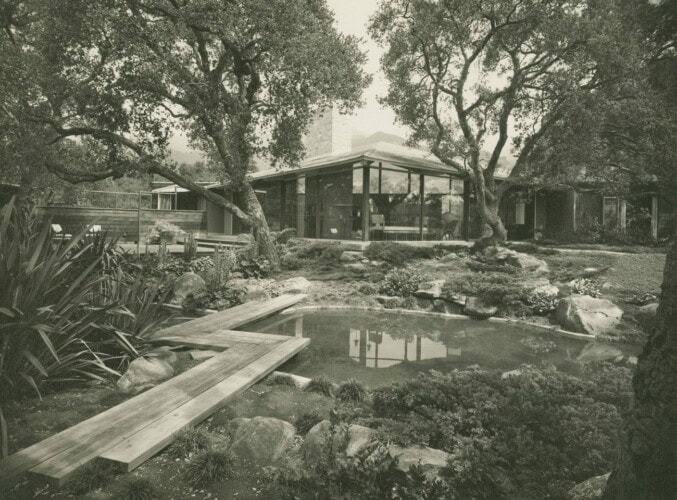
Tucked quietly into the oaks and chaparral of Montecito’s upper village lies a residence that doesn’t announce itself – it reveals itself. The Alice Erving House, completed in 1951, is one of those rare homes that feels as though it has always belonged to the land it rests on. And perhaps that’s the true measure of great architecture: when a house doesn’t fight the terrain or bend it to its will, but instead listens to it.Designed by Lutah Maria Riggs, the Alice Erving House is a study in intentional understatement. It’s also a time capsule – not in the nostalgic sense, but in its clarity of vision. It speaks to a particular moment in postwar California, when modernist ideals were beginning to seep into even the most tradition-bound enclaves, and when a woman working as an architect – let alone as a lead designer – was still quietly radical.
Lutah’s Quiet Power
Riggs is best known for her early work alongside George Washington Smith, the father of the Spanish Colonial Revival in Santa Barbara. As his chief draftsperson and later, as his chief designer, she had a formative role in shaping many of our town’s most iconic structures. But it was after Smith’s death in 1930 that Riggs’s voice came into full bloom – and in many ways, the Alice Erving House is one of the purest expressions of that voice.
By the time she designed this home, Riggs had already broken nearly every ceiling placed before her. She was Santa Barbara’s first licensed female architect, the first woman in California elevated to Fellow of the AIA, and a designer whose work had been published in House Beautiful, Architectural Record, and Time.
Her work spans a wide range – from grand estates to cultural landmarks – but it is unified by a commitment to design that serves both site and soul. Riggs’ architecture moves with a certain grace – unforced, intuitive, deeply responsive to light, land, and the rhythms of daily life. She mastered both the regional romanticism of Santa Barbara’s Spanish roots and the clean, restrained clarity of modernism. But her true gift was in navigating the places in between – creating living spaces that are rooted yet forward-thinking, formal yet deeply human.
The Erving House as an Autobiography
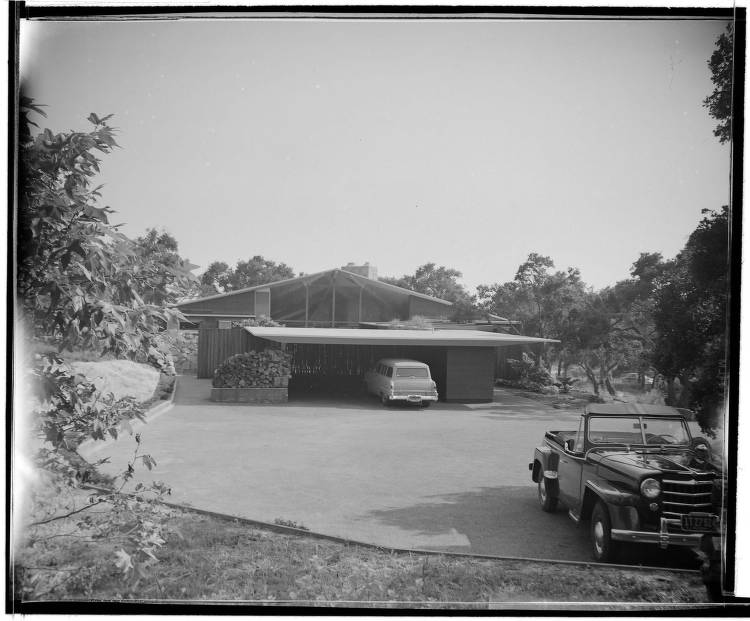
The Erving House came at a transitional time – in the world and in Riggs’ own career. Collaborating with landscape architect Thomas Church, Riggs explored more experimental forms. The result is a residence that sits lightly on the land but is conceptually weighty. It is one of her most modern works, yet its restraint and modesty are entirely consistent with her overall philosophy: to honor the site, elevate everyday living, and let the architecture serve the people within it.
One could say that this house is as close to an autobiography as Riggs ever wrote. It’s not grand or performative. It’s poised, rigorous, and deeply attuned to nature – like Riggs herself.
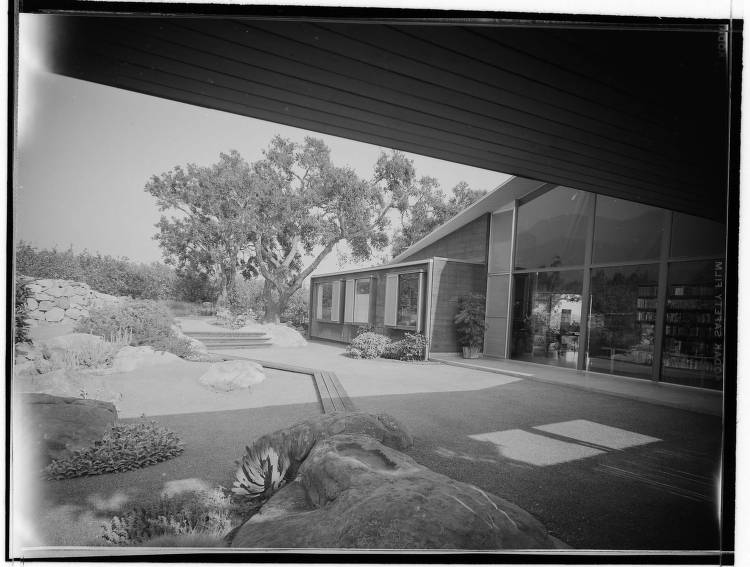
Vaulted ceilings and triangular glass walls open toward the mountains; interiors flow freely to exterior terraces; materials speak softly but with intention. It is, quite literally, a frame for living – a phrase Riggs often used in describing her role as an architect. “The house is not complete until its inhabitants bring it to life,” she once said. It’s a belief that echoes through every carefully drawn line of this home.
Riggs’ traveled with the Smith family on their architectural study trips to Mexico in 1922, and Europe in 1924. These immersive journeys served as pivotal moments in Riggs’ education, exposing her to the rich tapestry of architectural styles and influences that spanned continents.
A Living Legacy
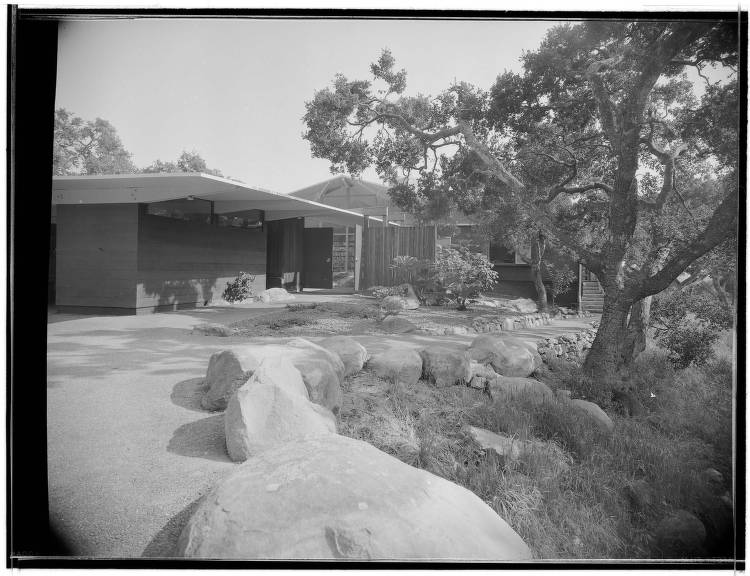
That the Alice Erving House still stands with its original character intact is a kind of architectural grace. In a town that so often renovates history into oblivion, it is rare to find a property that so elegantly preserves the original vision of its architect. And rarer still when that architect is someone like Riggs – a woman whose legacy is only now beginning to receive the full attention it deserves.
To understand Riggs’s impact is to look beyond the homes she designed – and into the institutions, landscapes, and cultural fabric of Santa Barbara itself. Her imprint can be felt in everything from the Lobero Theatre renovation, where she maintained the historical integrity of one of California’s oldest performance spaces, to the quietly transcendent Vedanta Temple, whose Indo-Asian forms speak to a deeper spiritual architecture. Each of these works reflect her lifelong commitment to thoughtful, site-responsive design.
As Montecito continues to evolve, homes like this serve as quiet reminders that lasting architectural value isn’t measured by scale or spectacle – but by clarity of vision, sensitivity to setting, and the integrity of thoughtful design.
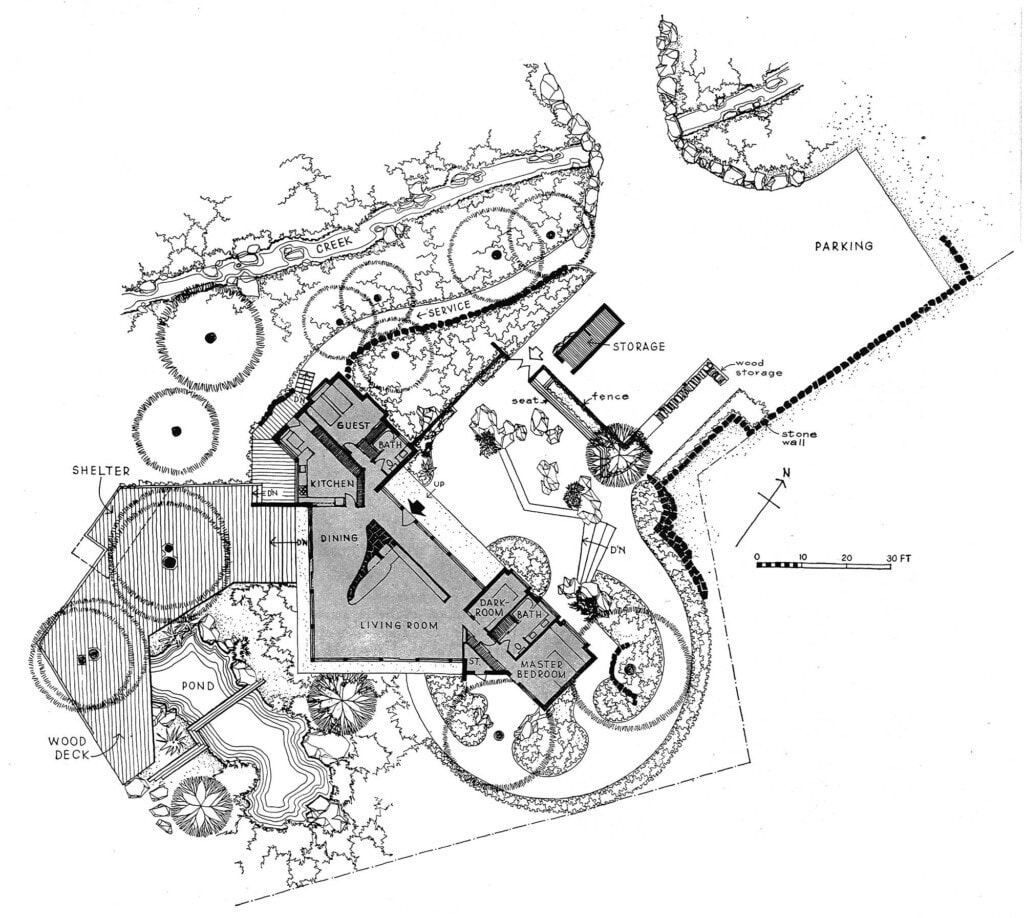
The Alice Erving House is more than just a home. It’s a reflection of Lutah Maria Riggs’ belief that architecture should serve the land, not impose upon it – that beauty lives in proportion, intention, and the quiet dialogue between structure and setting. In this way, the house is not only part of Montecito’s architectural story, but an enduring expression of the values that have shaped it.
The latest in Santa Barbara real estate and lifestyle FROM THE EBBIN GROUP
Subscribe to our weekly newsletter to stay up to date on real estate and economic news, local lifestyle trends, market data, and exciting new listings.